

Discover 4jawaly's basic and AI-powered auto-reply solutions on the official WhatsApp Business API, with flexible integrations and 24/7 technical support to turn customer inquiries into real sales opportunities.
Read moreAccording to Juniper Research, the number of active voice assistants worldwide is expected to surpass 8.4 billion by 2024, with annual growth of more than 25% in the business sector. With the launch of OpenAI's Realtime API, companies can now deliver instant, human-quality voice experiences across their digital channels. In this comprehensive guide, we explore the details of this advanced technical interface and how it can be integrated with 4jawaly services to transform traditional communication channels such as WhatsApp Business and SMS into intelligent voice experiences that reduce response time and increase customer satisfaction.
The Realtime API is an advanced application programming interface released by OpenAI to let developers process audio directly without waiting for requests to complete. The API is built on the WebSocket protocol, which provides a persistent, bidirectional connection between the client and the model. This makes the connection stateful, allowing the model to automatically retain conversation context without resending previous messages with every request.
This API differs fundamentally from traditional interfaces that rely on the request-response pattern. It enables speech processing and streaming voice responses with extremely low latency. That means a user can talk to a voice agent and receive a near-instant reply, just as if they were speaking with a human.
The API also supports multiple connection options, including WebRTC for browser-based applications, SIP for integration with traditional telephony systems, and Webhooks for receiving session events on your own server. This versatility makes it suitable for a wide range of scenarios, from contact centers to mobile apps and e-commerce platforms.
When you start working with the API, you first need to configure a session tailored to the type of application you're building. The session.type property defines the session type, and there are two main types serving different use cases. The first is realtime, designed for speech-to-speech sessions, where the model receives audio and responds with audio directly without going through a text stage.
The second type is transcription, intended for real-time speech-to-text sessions. It is typically used for automatic dictation, meeting note-taking, and call analytics. You can also set the instructions property to guide the model with specific behavior, such as the desired tone, language, or voice agent persona (friendly, formal, technical), and specify the output modality—whether audio only, text only, or both.
To start a new session, you first need to obtain an ephemeral API key for security reasons, then create the session via an HTTP request to the /v1/realtime endpoint with the header Content-Type: application/sdp. After that, you can set up a WebSocket or WebRTC connection and begin streaming audio. These relatively simple steps let developers quickly start building applications without requiring complex infrastructure.

The quality of the user experience depends heavily on complying with the technical audio specifications. When sending audio to the model, chunks must be in PCM 16-bit little-endian format at a sample rate of 24 kHz. This format provides an excellent balance between audio quality and transmitted data size, ensuring smooth performance even on networks with limited bandwidth.
The official Realtime client provides an appendInputAudio function that simplifies converting audio data from the 32-bit float format commonly used in web browsers to the required 16-bit PCM format. On the other hand, the model sends back audio chunks in real time that can be played directly in the browser via the Web Audio API or processed for additional purposes such as storage, analytics, or integration with IVR systems.
A critical consideration is audio flow control (throttling): you must not send audio chunks too quickly to avoid session failure or exceeding usage limits. It is recommended to buffer audio data and send it at appropriate intervals, typically every 20–40 milliseconds, to ensure connection stability and the best possible end-user experience.
OpenAI offers a variety of models to meet different needs in terms of quality, speed, and cost. For text-to-speech (TTS), you can choose between three main models:
For speech-to-text (ASR), the system relies on the whisper-1 model, which has proven its superiority in speech recognition accuracy and supports more than 50 languages, including Arabic with its various dialects. The model provides high-accuracy real-time dictation even in noisy environments, making it the optimal choice for customer service and contact center applications.
Advanced features also include professional context management, including token compaction, token counting, and prompt caching, which significantly reduces costs when dealing with repeated prompts.

The Realtime API opens broad horizons for business applications that can fundamentally transform how companies interact with their customers. Among the most prominent is voice customer service agents operating across WhatsApp Business or SMS, where users can speak directly in their natural language and receive an instant voice response as smoothly as they would from a human agent.
Another highly important application is real-time sales call analysis, where the system can analyze conversations as they happen and extract key performance indicators such as the customer's interest level, potential objections, and upsell opportunities, then provide instant suggestions to the sales representative. This significantly boosts conversion rates and improves training quality for sales teams.
You can also build a voice-based guidance system for e-commerce applications that helps customers navigate products and answer their questions in natural voice, as well as generate voice content for personalized marketing messages delivered across various digital channels. These applications transform shopping from a rigid text experience into a rich interactive experience that increases customer loyalty and retention.
In healthcare, the API can be used to build voice assistants that remind patients of appointments and medications. In education, virtual tutors can be developed to interact with students in their native language and deliver personalized interactive lessons that adapt to each student's level.
When handling customer voice data, security and regulatory compliance become top priorities. OpenAI's Realtime API provides a high level of protection by encrypting all transmitted data via TLS, ensuring that data is not intercepted during transit between the client and servers.
It is also important to enable inappropriate content filters using the accompanying Moderation API, especially in applications aimed at the general public or minors. These filters automatically detect and block offensive or inappropriate content from appearing in system responses, protecting your brand's reputation.
For companies operating in Saudi Arabia and the GCC, you must comply with privacy and data protection policies in accordance with local standards such as ZATCA and the Saudi Personal Data Protection Law (PDPL). This includes obtaining explicit consent from customers before recording their conversations, providing a clear mechanism for data deletion requests, and storing sensitive data on local servers when required.
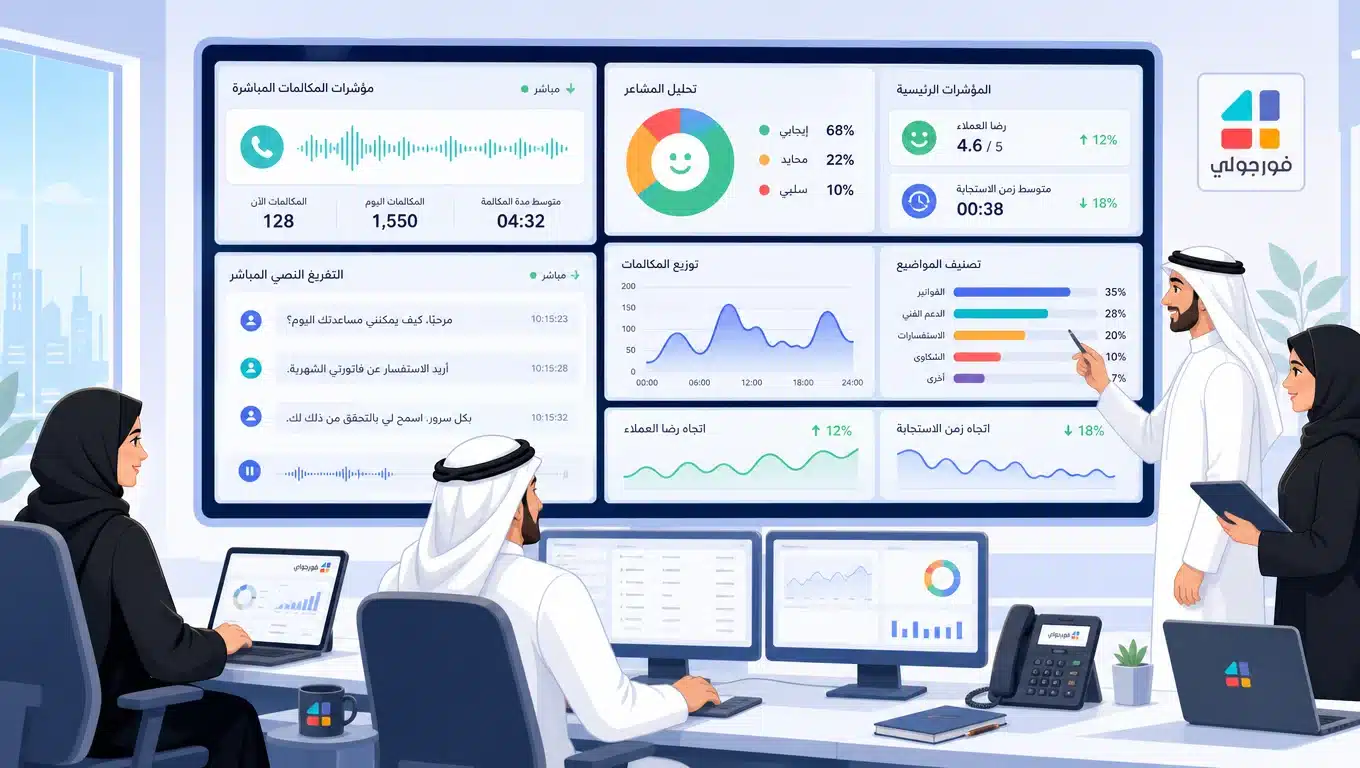
Despite the power of OpenAI's Realtime API, taking full advantage of it requires robust communication channel infrastructure and specialized technical support. This is where 4jawaly comes in as a strategic partner, providing the bridge between advanced technologies and the communication channels your customers use every day.
4jawaly offers a comprehensive suite of solutions that enable you to seamlessly integrate intelligent voice agents with your existing channels:
Leveraging 4jawaly's more than a decade of experience in enterprise communications, you can turn your vision for an intelligent voice application into a tangible reality that delivers measurable results in customer satisfaction and revenue growth.
Experience today how combining OpenAI's advanced AI technologies with 4jawaly's trusted infrastructure can give your company a real competitive edge in a market where the adoption of intelligent automation is accelerating. Contact our experts today to start your journey toward an exceptional voice customer experience.
Discover 4jawaly's basic and AI-powered auto-reply solutions on the official WhatsApp Business API, with flexible integrations and 24/7 technical support to turn customer inquiries into real sales opportunities.
Read more
Discover how SMS messaging services help you build high-impact marketing campaigns, with a full breakdown of features and best practices for maximum ROI.
Read more
A complete operational guide to sending branded SMS messages online through 4jawaly—from sender name approval to templates, variables, and scheduled campaigns.
Read more